Instandhaltungssoftware für Industrie, Versorger und Windkraft
Ladders and step stools must be inspected regularly in commercial settings—usually at least once a year—by a qualified person (DGUV Information 208-016). With GS-Service, you can plan ladder inspections digitally, keep deadlines and inspection status for all ladders and step stools in view, and document defects in an audit-proof manner.
In GS-Service, GreenGate provides dynamic management of all ladders and step stools in operation. The GreenGate solution creates the necessary transparency to meet required ladder and step-stool inspections within set deadlines. It also makes it possible to significantly reduce the operational effort for these inspections.
In commercial settings, ladders and step stools must be inspected regularly—usually at least once a year—by a qualified person in accordance with DGUV Information 208-016. The inspection includes visual and functional checks for defects such as deformation, cracks or missing parts, followed by documentation and labeling to ensure occupational safety.
The GreenGate solution helps companies carry out the legally required inspections of ladders and step stools efficiently, transparently and audit-proof. With digital management of all ladders and inspection tasks,
users have a clear overview of the current inspection status of all work equipment at all times.
The GreenGate system manages all ladders and step stools as separate objects. For each ladder, relevant master data and inspection information are stored. This includes among other things the manufacturer, type, asset number, location, purchase date, inspection interval and the date of the last inspection carried out.
To ensure legal and operational requirements, an annual recurring inspection task is created for each ladder. This ensures that all ladders and step stools are regularly checked by a qualified person within the prescribed inspection interval.
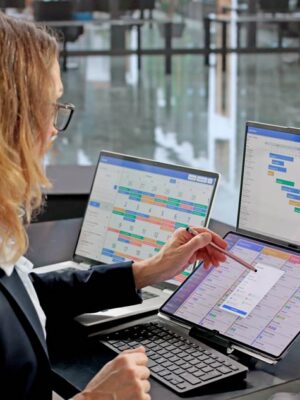
When a new ladder is created in the system, the system automatically creates the associated inspection task with the defined inspection cycle. This ensures that newly purchased work equipment is integrated into the inspection process immediately and no inspection is missed. A suitably qualified employee carries out the inspection. They locate the respective ladders on site and systematically work through the inspection list stored on the tablet or smartphone (structured checklist in GS-Service).
Identified defects can be documented directly in the system. You can distinguish between
Minor issues can be remedied immediately and documented as resolved. If the ladder is no longer safe to operate, it can be taken out of service immediately. In this case, the status in the system is adjusted accordingly and further use is prevented until repair or replacement takes place.
After the inspection has been successfully completed, the following are documented in the system in an audit-proof manner:
The next inspection date is then generated automatically in line with the defined inspection interval.
Aschaffenburger Versorgungs-GmbH